

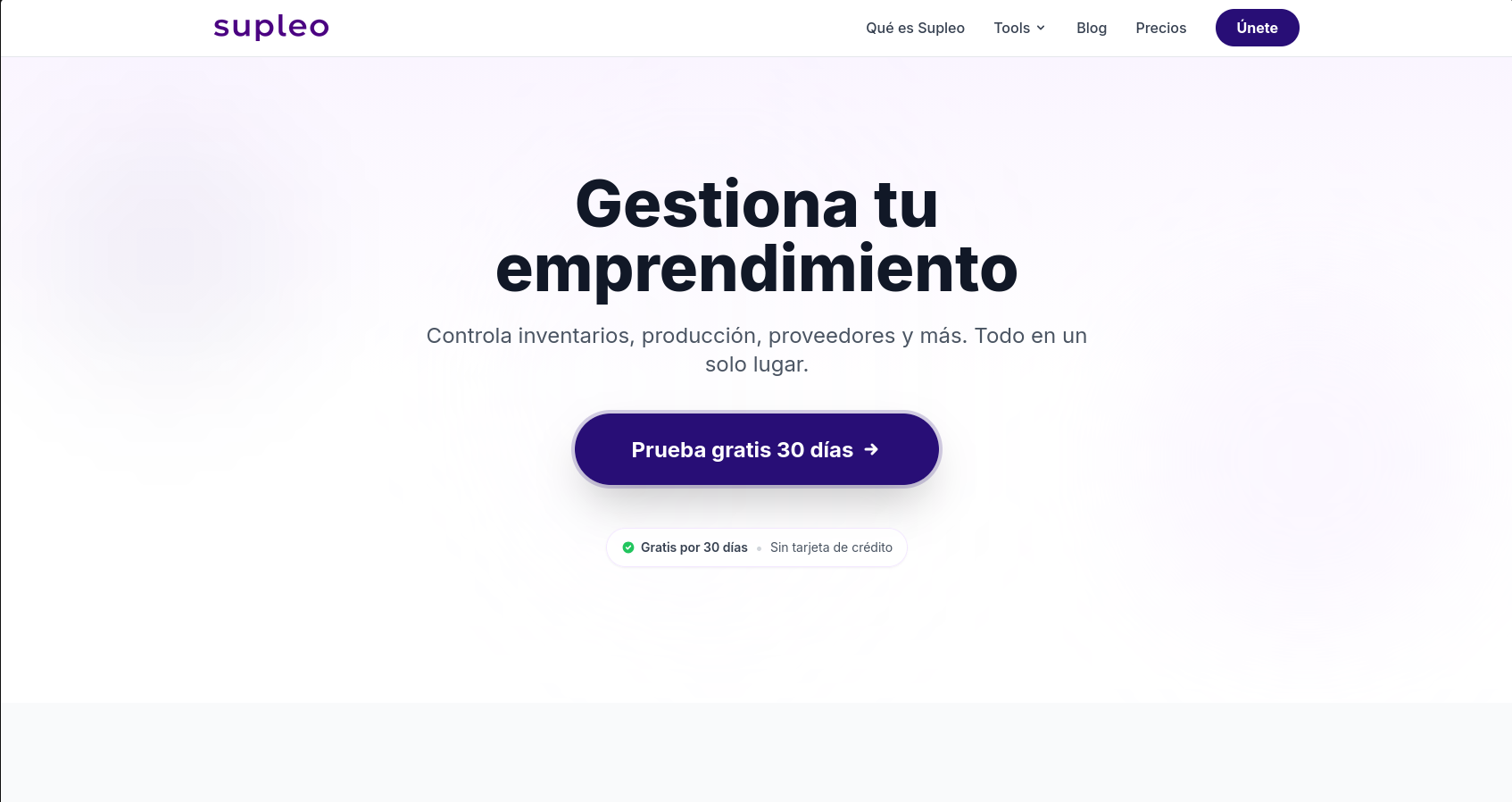
Supleo is a SaaS platform for micro-entrepreneurs who transform raw materials into finished goods. The focus is to simplify business operations in one place. This entry is an extended version: the problem it solves, its current stage, how it was built, and the challenges along the way.
Why Supleo exists
The idea comes from a repeated pattern: small businesses with strong craft and talent, but fragmented processes. Purchasing in one place, costs in another, inventory on scattered sheets, and decisions made without a clear view of real margins. Supleo exists to bring those pieces together with a simple flow designed for people who both produce and sell.
Current status
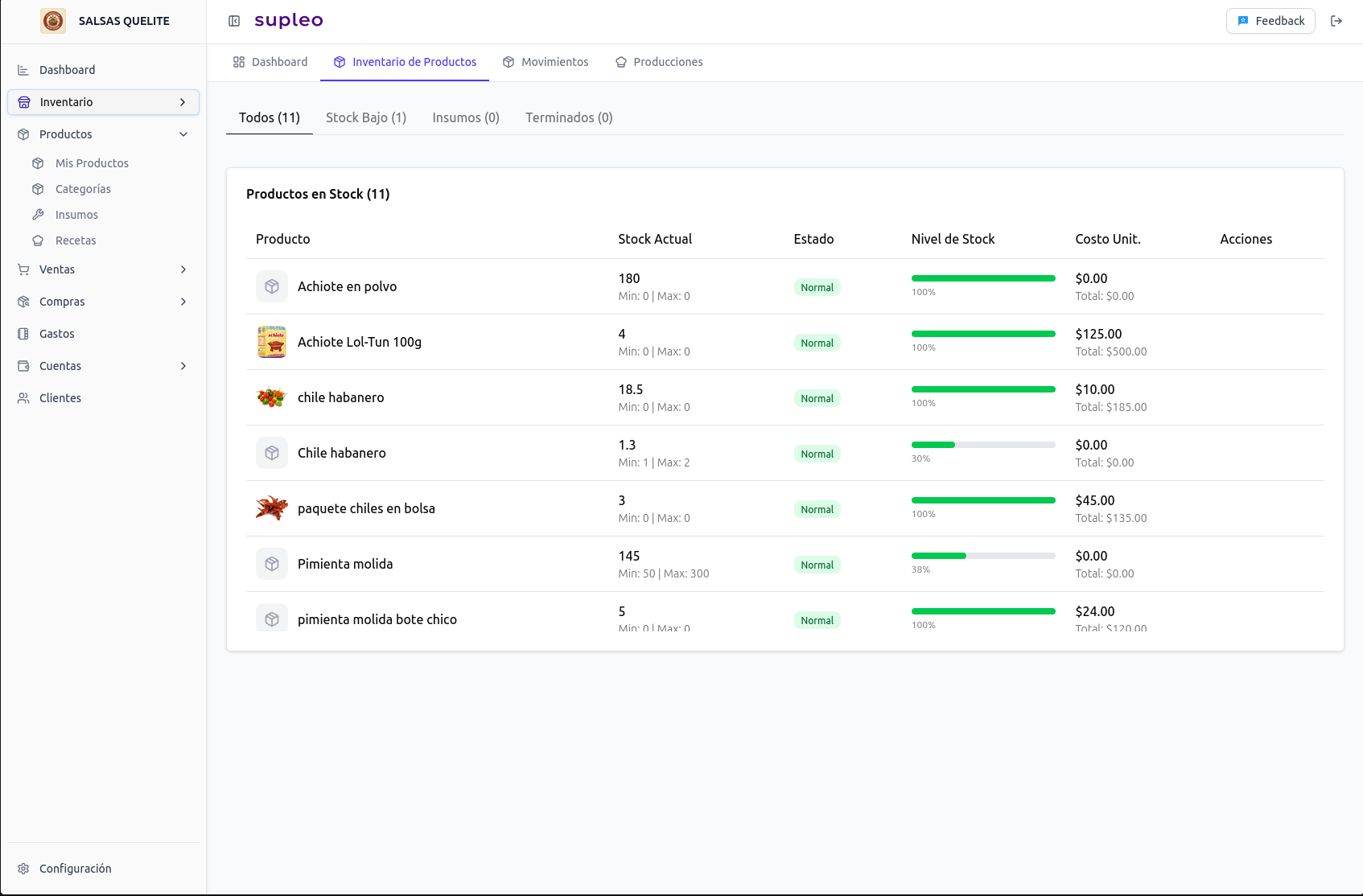
Supleo is currently in MVP beta. The product already covers the core flow (purchasing, inventory, costs, and basic sales) and is being tested with pilot users. The goal of this stage is to validate the core value, refine onboarding, and confirm that people can sustain daily use without friction.
What it solves in practice
Supleo aims to give day-to-day operational visibility: how much it costs to produce, which inputs are moving fastest, and how cash flows. The platform prioritizes approachable language and a structure that feels natural for people who do not come from traditional enterprise tools.
Interesting technical challenges
One challenge was modeling costs and input transformations without making the system complex for the user. Another key challenge was ensuring consistency between inventory movements and sales to avoid discrepancies that are hard to reconcile later. Performance was also a focus so critical views (inventory, costs, reports) remain fast even with history.
Product challenges
The main challenge was onboarding: asking for the minimum information without overwhelming the user. Another challenge was usage frequency: the product must fit into daily routines for data to be trustworthy. The key has been simplifying the first journey and guiding users toward moments of quick value.
Business challenges
At this stage the business challenge is defining a sustainable model that fits micro-entrepreneurs: clear pricing, tangible value, and acquisition channels that do not inflate operating costs. In parallel, the platform must communicate impact without requiring a steep learning curve.
Lessons learned
- The right problem matters more than perfect functionality.
- Workflow clarity beats feature quantity.
- Data quality depends on how much effort you ask from users.
- Continuous validation prevents building in a vacuum.
Next steps
The next stage focuses on closing MVP gaps, improving guidance, and adding high-impact integrations. Visual materials are also being prepared to better communicate how the platform works and how the architecture fits together.